Challenges of Census Data in Emergencies

Challenges of Census Data in Emergencies

Challenges of Census Data in Emergencies

Census tables are indispensable-but fragile in a fast-moving crisis. Displacement, outdated vintages, and coarse polygons break the denominator. Here's how to patch the gaps.

Why census tables crack under pressure

Census data is foundational-but crises move faster than decennial cycles. Displacement, seasonality, and access constraints can make yesterday's denominators misleading. UNHCR's population estimation guidance and ACAPS' technical brief explain why estimations and triangulation are essential in emergencies.

The common failure modes

  • Stale vintages: slow updates and lags in intercensal projections.

  • Coarse polygons: admin boundaries hide within-district contrasts.

  • Non-resident populations: commuters, IDPs, and refugees break stock-based counts.

  • Access bias: damage and insecurity skew who can be counted.

How to patch the gaps

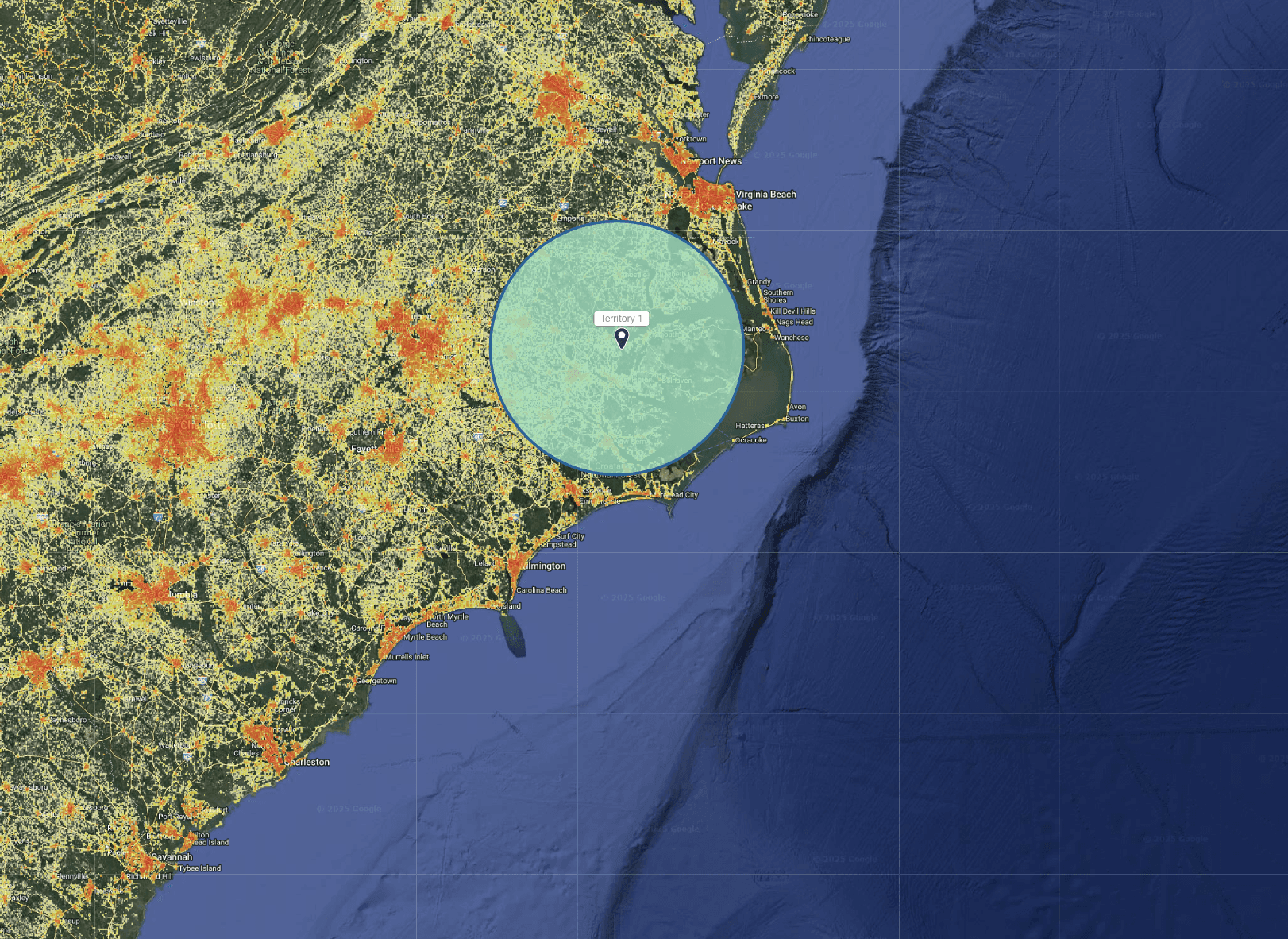
Use modeled grids to redistribute census totals and update likely patterns (WorldPop methods; LandScan). Cross-check with displacement/mobility data (DTM) and rapid assessments (mVAM). Share the baselines and assumptions to keep partners synchronized.

From diagnosis to action

  1. Declare the census vintage and the redistribution method you're using.

  2. Quantify uncertainty (ranges, MOE) and show sensitivity to key assumptions.

  3. Publish reproducible maps and a data dictionary so others can build on your work.

Where to go next

Last updated

Population Explorer

Related News

Related News

Related News

Explore expert articles, eCommerce guides, and the latest updates to help your business grow smarter and sell better with Unistore.

May 14, 2026

São Paulo Retail and Franchising: Emerging Retail Corridors Beyond the City’s Established Commercial Centers

São Paulo’s strongest retail opportunities may not emerge from its most established commercial centers. Using high-resolution population forecasts, ambient population analysis, retail density, and drive-time territory mapping, this analysis explores how customer growth and retail competition are beginning to diverge across several secondary corridors in the broader São Paulo metro.

May 12, 2026

55 U.S. Metros Ranked by Ambient Population Growth (2016–2024)

Ambient population measures where people actually concentrate throughout the day across work, commuting, tourism, logistics, and commercial activity. This report analyzes ambient population growth trends across 55 major U.S. metros between 2016 and 2024 using LandScan data, revealing how patterns of human activity have shifted beyond residential population growth alone.

May 11, 2026

Site Selection Analysis: Is Cape Town’s New R650m Mall in the Right Location?

Cape Town’s new R650 million GrandWest Mall development sits less than 10km from Canal Walk, one of Africa’s largest shopping malls. At first glance, the location appears risky. But drive-time catchment analysis tells a very different story. This analysis explores how primary, secondary, and tertiary retail trade areas shape competition, customer accessibility, and mall performance, and why geographic distance alone can be misleading in retail site selection.

Looking to Map Smarter Territories?

Use Population Explorer's powerful tools to turn insights into action.

No credit card required • Free trial account • Cancel anytime

Looking to Map Smarter Territories?

Use Population Explorer's powerful tools to turn insights into action.

No credit card required • Free trial account • Cancel anytime

Looking to Map Smarter Territories?

Use Population Explorer's powerful tools to turn insights into action.

No credit card required • Free trial account • Cancel anytime

© 2025 Population Explorer. All rights reserved.

© 2025 Population Explorer. All rights reserved.

© 2025 Population Explorer. All rights reserved.