Overview
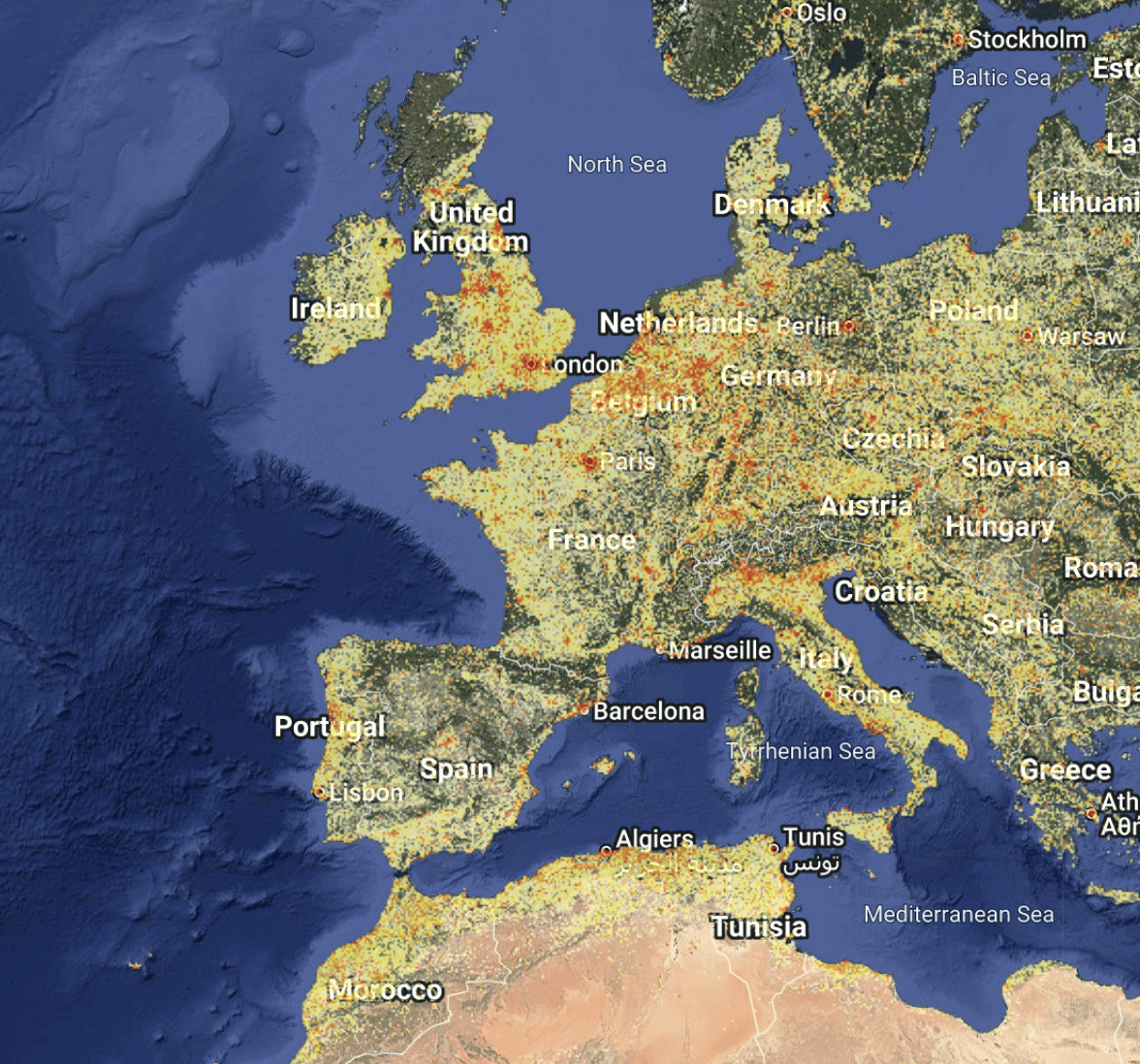
Population data underpins much of modern spatial analysis — from public health and humanitarian planning to commercial site selection and environmental modeling. Yet, not all population data is created the same. Three of the most commonly used sources — Census, LandScan, and WorldPop — differ fundamentally in how they define, collect, and represent population.
This article provides an impartial comparison of these models, explaining their methodologies, assumptions, and appropriate use cases. Understanding these distinctions is essential for interpreting spatial population data correctly and choosing the right model for a given application.
The Three Primary Models
Model | Description | Resolution | Temporal Frequency | Strengths | Limitations |
|---|---|---|---|---|---|
Census Data | Officially collected enumeration of people, usually tied to administrative boundaries such as tracts, wards, or municipalities. | Varies by country and administrative level | Typically every 5–10 years | Legal authority; detailed socio-demographic attributes; consistent methodology within each nation. | Coarse spatial granularity; temporal lag; boundary and coverage inconsistencies; inaccessible in some regions. |
LandScan | Developed by Oak Ridge National Laboratory (U.S. DOE). Uses spatial modeling and ancillary data (land cover, roads, satellite imagery) to estimate ambient population — where people are likely to be during a 24-hour cycle. | ~1 km globally; ~90 m U.S. | Annual | Captures daytime and transient population; globally standardized; publicly accessible. | Not a census; models presence rather than residence; may misrepresent purely residential or seasonal populations. |
WorldPop | Created by the University of Southampton and partners. Uses machine learning to disaggregate census totals into ~100 m grid cells using covariates such as land use, infrastructure, and settlement data. | 100 m | Annual (historical and projected) | High spatial detail; open access; harmonized across countries; integrates well with other global datasets. | Dependent on base census accuracy; models residential population (nighttime presence); potential uncertainty in informal settlements. |
Conceptual Differences
These datasets diverge primarily in their interpretation of population presence:
Census counts individuals at their usual place of residence. It’s definitive but temporally static, serving as a ground-truth reference for subsequent models.
LandScan estimates ambient population — people’s presence across space and time. It integrates human mobility and built environment data to reflect where people spend their day.
WorldPop models residential population, emphasizing where people live, not necessarily where they work or travel.
The conceptual spectrum runs from enumerated → modeled → disaggregated, representing a tradeoff between authority, frequency, and spatial precision.
Methodological Overview
Dimension | Census | LandScan | WorldPop |
|---|---|---|---|
Data Source | Government surveys and enumerations | Satellite imagery, roads, land use, census inputs | Census data, remote sensing, machine learning covariates |
Processing Method | Enumeration and aggregation | Spatial allocation and regression modeling | Dasymetric disaggregation with covariate weighting |
Output Format | Vector polygons (administrative units) | Raster grid | Raster grid |
Interpretation | Actual counts per boundary | Estimated presence probability | Estimated residential allocation |
Comparative Applications
Analytical Context | Recommended Model | Rationale |
|---|---|---|
Policy and Governance | Census | Official, standardized, and institutionally recognized. |
Infrastructure and Accessibility Modeling | LandScan | Represents where people are located throughout the day. |
Health and Humanitarian Analysis | WorldPop | Aligns with household-level demographics and settlement structures. |
Retail and Service Coverage Studies | LandScan or WorldPop | LandScan for transient activity; WorldPop for residential demand. |
Validation and Benchmarking | Census | Serves as the calibration baseline for gridded models. |
Key Considerations
Temporal lag: Census data may be up to a decade old, while LandScan and WorldPop provide annual updates.
Spatial resolution: WorldPop’s 100 m resolution captures micro-patterns, while LandScan’s 1 km grid is suited for regional studies.
Model assumptions: Gridded datasets redistribute census counts based on covariates — they don’t replace enumeration but enhance spatial realism.
Uncertainty: None of these datasets is uniformly “best.” Their utility depends on question, scale, and available ground truth.
Complementarity Rather Than Competition
Census, LandScan, and WorldPop should not be viewed as competing sources but as complementary perspectives on the same phenomenon.
Census defines how many people there are.
LandScan shows where they likely are at any time of day.
WorldPop estimates where they reside permanently.
Used together, they provide a multi-dimensional view of population — static, dynamic, and modeled — supporting a wide range of academic, policy, and commercial analyses.
See how these differences actually impact retail site selection and franchise territories →
References
Need More Help?
If you run into issues, please contact us.