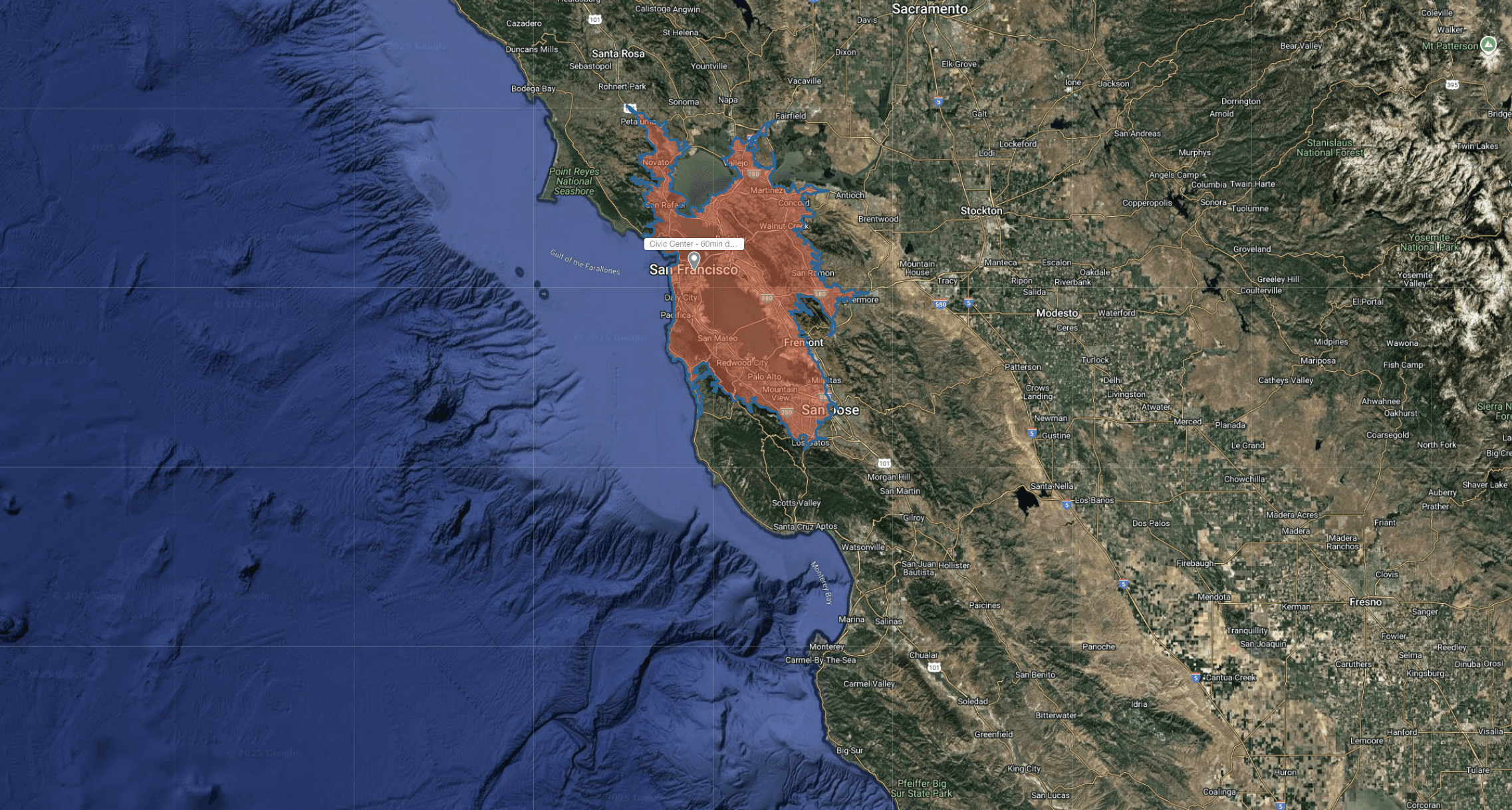
Discover how isochrones help measure reachable populations in minutes, and why they matter for planning and territory design.

Overview
An isochrone is a boundary that shows how far you can travel from a point within a given time. Instead of measuring distance in kilometers, it measures access in minutes. In Population Explorer, isochrones let you quickly see how many people live within 5, 10, or even 60 minutes of a chosen location.
Use Cases
Retail site selection: understand the population within a 15-minute drive of a new store.
Healthcare planning: measure who can reach a clinic within walking distance.
Franchise territories: build service areas that match real-world drive times, not just straight-line distances.
Emergency services: map populations reachable within a critical response window.
Related Resources
Explore expert articles, eCommerce guides, and the latest updates to help your business grow smarter and sell better with Unistore.

Jun 26, 2026
The Cornfield Effect
The cornfield effect is a systematic error in demographic analysis that occurs when census data attributes population to uninhabited areas (e.g., farmland, parks, industrial zones) within a census boundary. This distortion leads to overestimates of customer density and misguided location decisions with notable, negative impacts on franchise territory design and retail site selection. Constrained population models, such as WorldPop Global 2, eliminate the cornfield effect by assigning population only to areas where human settlements have been confirmed to exist.

May 22, 2026
You Can Create a Franchise Territory in Less Than 2 Minutes
Franchise territory mapping no longer has to mean expensive consultants, complex GIS software, or weeks of setup. Modern tools let franchisors create, evaluate, and compare protected territories in minutes.

May 22, 2026
At What Point Does a Franchise Need Territory Mapping?
Not every franchise needs rigorous territory mapping on day one. But once territory decisions begin affecting franchise sales, market protection, expansion planning, and long-term network value, the stakes change quickly.