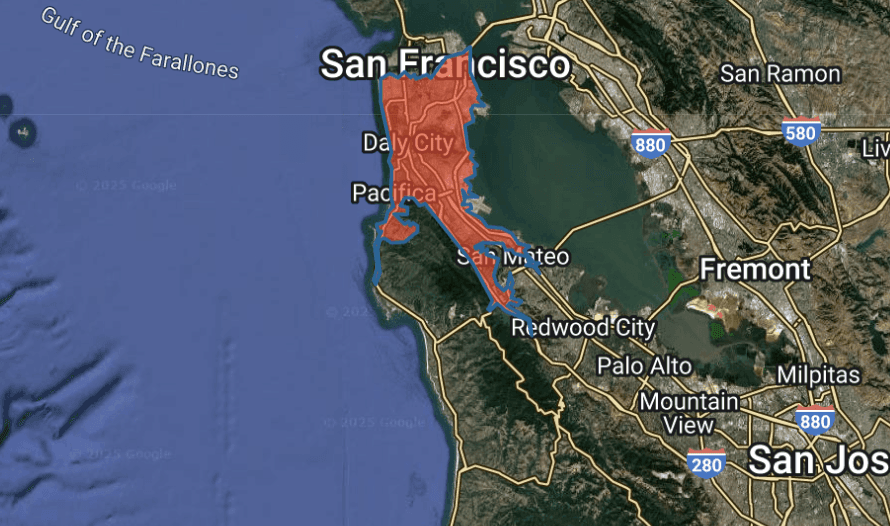
If you manage territories or prioritize sites, raw population tells you how many—income helps explain capacity. PopEx’s income layer aligns household income to the same population grid you use for sizing, so territory splits and catchments can consider both people and purchasing power with one workflow.
What it is
A gridded household income surface aligned to the population raster, available in select markets (e.g., US; England & Wales). Values are reported as provided by the source and are not inflation-adjusted. Currency is displayed per market (e.g., USD for the US).
How PopEx builds the income layer (high level)
Source & units: Median household income at census small-area levels.
Alignment: Income is distributed to the population grid so income and people align spatially.
Breakdowns: Income appears alongside population metrics (total, age/sex, density, average age, gender ratio).
Area math: Densities use geodesic (WGS84) area for consistency.
Interpreting results
Coverage varies: Income appears where the market is supported; otherwise it’s omitted.
Currency: Displayed per market (e.g., USD, GBP); values are not inflation-adjusted.
Overlaps: Folder summaries respect union/dissolve rules—no double counting in overlaps.
Use cases
Territory management — balance splits by both headcount and purchasing power
Retail & site selection — rank potential sites by income-weighted opportunity
Public services — align outreach with economic context
Further reading
Need More Help?
If you run into issues, please contact us.