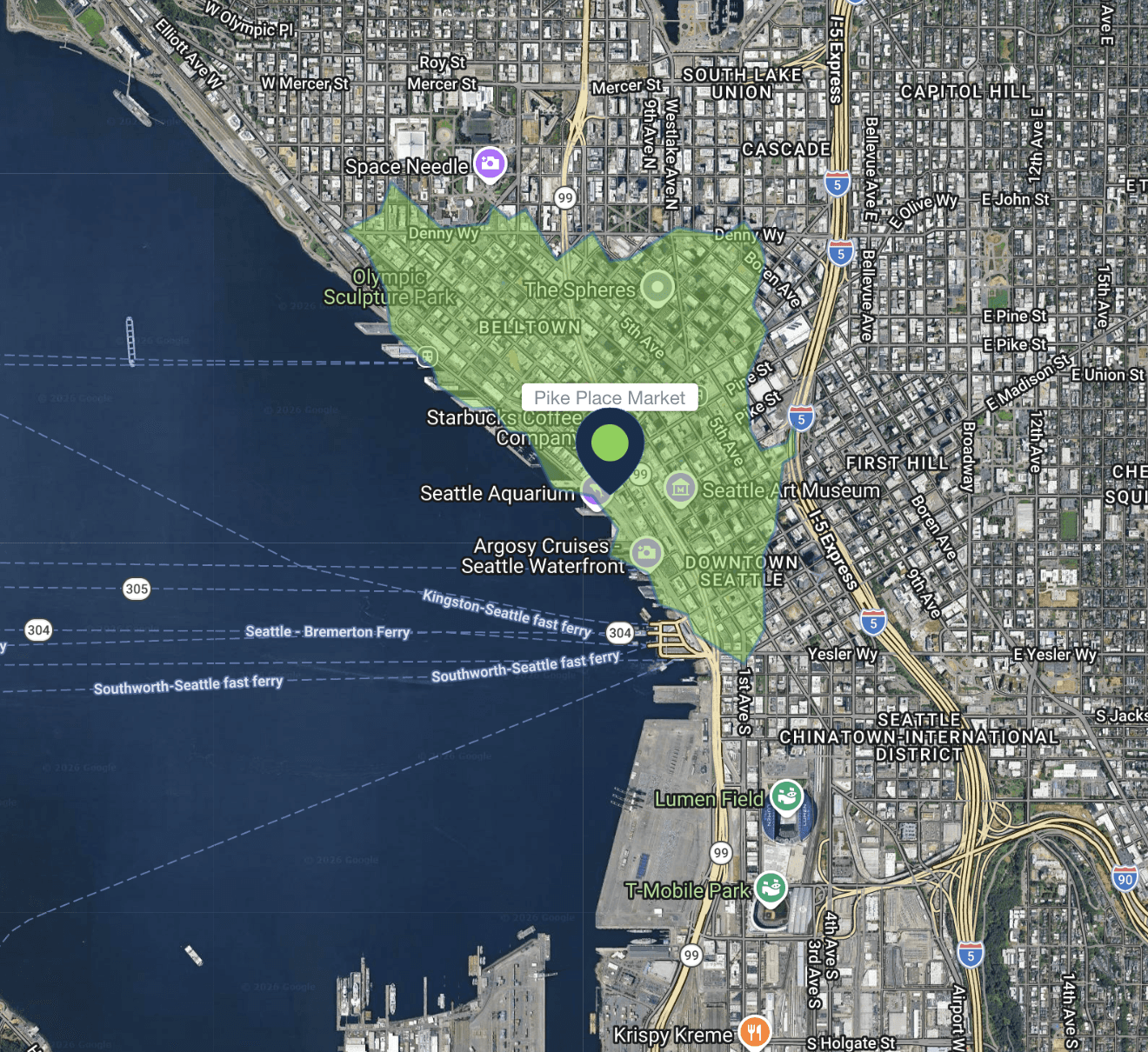
You Can Create a Franchise Territory in Less Than 2 Minutes
One of the biggest reasons franchisors delay territory mapping is simple: they assume the process is going to be painful.
Historically, that assumption was fair.
For years, franchise territory mapping was tied to expensive consultants, technical GIS software, long onboarding cycles, and static demographic reports that became outdated almost immediately. For many non-technical franchisors, the entire category felt intimidating before the process had even started. That perception still exists today, even though the technology behind franchise mapping has changed dramatically.
Most franchisors are not trying to become GIS analysts. They are trying to answer practical business questions:
How many customers exist inside this territory?
Are we protecting enough market opportunity for the franchisee?
Are these two locations going to overlap?
Which markets are stronger than others?
How much whitespace remains for future expansion?
The good news is that modern franchise territory mapping no longer requires weeks of training, outside consultants, or complicated software.
In many cases, you can create and evaluate a territory in just a few minutes.
Why franchise territory mapping used to feel complicated
Historically, territory mapping software and solutions were often designed for technical users rather than franchisors. Many older platforms assumed users were adept at:
GIS concepts
demographic analysis
trade areas
shapefiles
spatial databases
map layers
coordinate systems
That created a major disconnect. Retail site selectors, franchisors and others were faced with either long, slow learning curves, or expensive consultants to shortcut the process. Neither seemed attractive.
A franchisor evaluating franchise expansion opportunities does not necessarily want to learn technical mapping terminology. They usually just want to visualize markets, compare territories, and make better expansion decisions.
The industry has gradually moved away from that model. Modern SaaS platforms are simpler, faster, and far more approachable for non-technical operators. The workflow today feels much closer to using a business application than operating a GIS platform.
What most franchisors actually need
Most franchise territory planning starts with a surprisingly small set of actions.
In practice, many franchisors simply need to:
draw or define a protected territory
generate a drive-time trade area
compare customer density across markets
evaluate nearby businesses or competitors
understand income and demographic patterns
export a map for an Item 12 or internal discussion
With today's technology, these items do not require a massive enterprise mapping application.
Creating a franchise territory in less than 2 minutes
We have designed Population Explorer to provide world-class territory intelligence in a simple, easy-to-use application.
A typical workflow looks something like this:
Search for a city, address, or region.
View population, income, and demographic information instantly.
Compare territories against other candidate markets.
Export or share the results.
That entire process can happen in a few minutes without needing a technical background.
More importantly, the workflow is flexible enough for both early-stage franchisors and larger franchise systems. Some users simply want to sketch out an Item 12 territory. Others are comparing dozens of candidate markets across multiple metros.
The underlying workflow stays relatively lightweight.
Franchise territory mapping is no longer just for enterprise brands
One of the biggest changes in the industry over the last decade is accessibility. Territory planning used to be concentrated among larger franchise systems with dedicated consultants, mapping specialists, or expensive enterprise contracts. Smaller and emerging franchisors often postponed mapping simply because the process felt too expensive or operationally heavy.
That gap has narrowed significantly. Modern demographic infrastructure, cloud computing, and satellite-derived population systems have made sophisticated territory analysis available to much smaller franchise organizations.
That means a growing franchise brand can now evaluate:
customer density
trade area coverage
competitor concentration
income patterns
and expansion opportunities
without needing a large internal analytics team.
In practical terms, the barrier to entry is much lower than many franchisors still assume.
Ready to try it?
You can create franchise territories yourself directly inside Population Explorer, or you can send us a few locations and we will help mock up the territory structure for you.
Either way, the goal is the same: helping franchisors make clearer territory decisions without introducing unnecessary complexity into the process.
If you want to see how quickly the workflow actually works, start here.