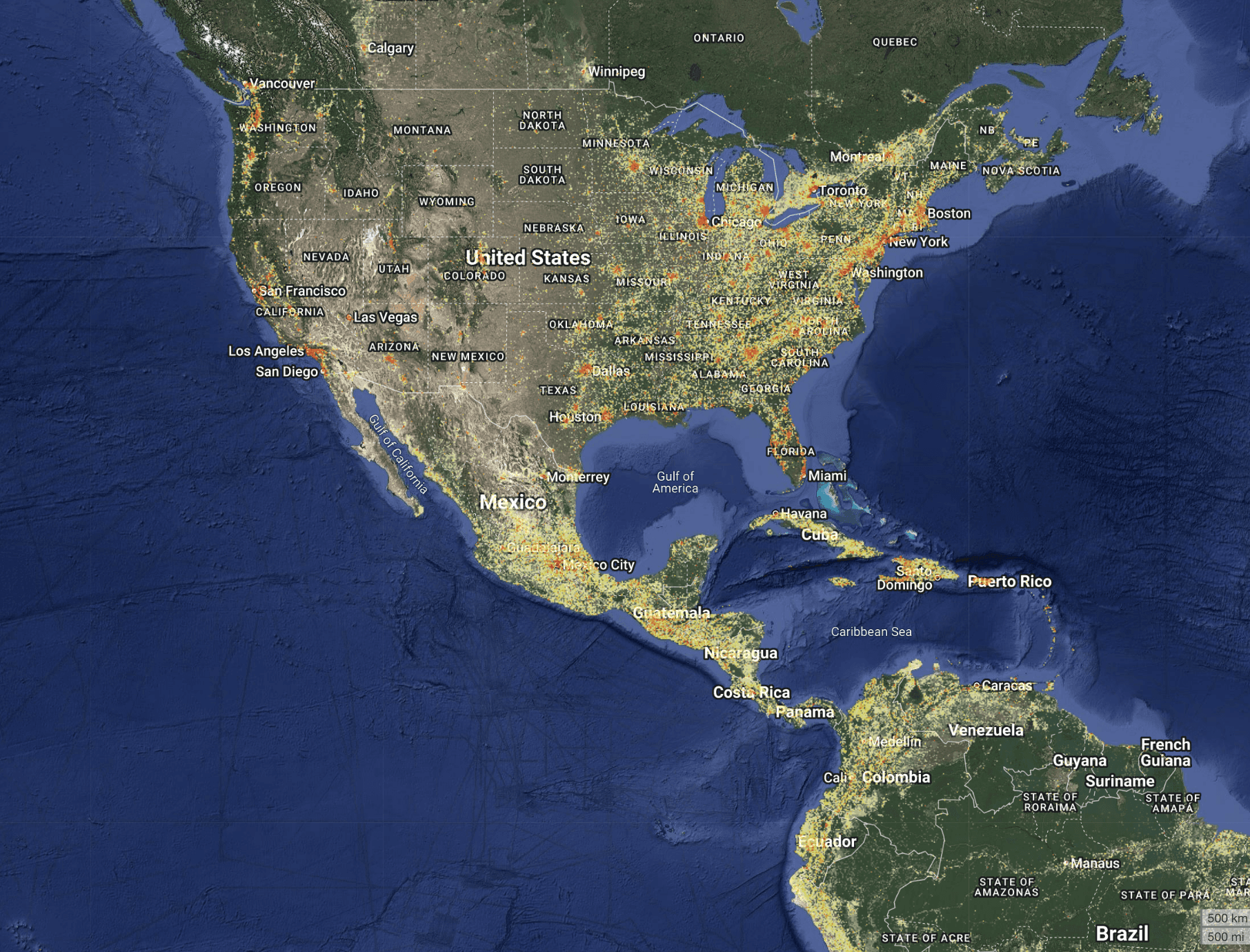
The Next 5 Years of Population Growth Will Reshape Expansion
Population growth over the next five years won’t be evenly distributed across the U.S.
Some metros are accelerating. Others are slowing. And a few are moving in opposite directions from earlier forecasted trajectories.
We analyzed 55 major U.S. metro areas and ranked them by projected population growth from 2025 to 2030.
The gap between the fastest- and slowest-growing markets is wider than most people realize, and many of the markets attracting the most attention aren’t the ones growing the fastest.
Top 10 Fastest Growing Metros
The fastest-growing metros are not evenly distributed; they are heavily concentrated in a few regions, particularly across Texas, Florida, and the Southeast.
Metro | 2025 Population | 2030 Growth Forecast |
|---|---|---|
Dallas, Forth Worth, Arlington | 8,336,803 | 16% |
Orlando, Kissimmee, Sanford | 3,335,247 | 14% |
Raleigh, Cary | 1,675,931 | 14% |
Phoenix, Mesa, Chandler | 6,514,848 | 13% |
Las Vegas, Henderson, North Las Vegas | 2,821,728 | 13% |
Austin, Round Rock, San Marcos | 2,602,082 | 13% |
Jacksonville | 1,965,248 | 12% |
Charlotte, Concord, Gastonia | 3,017,822 | 11% |
Nashville, Davidson, Franklin | 2,179,916 | 10% |
Tampa, St Petersburg, Clearwater | 2,790,840 | 9% |
Bottom 10 / Slowest Growing Metros
Metro | 2025 Population | 2030 Growth Forecast |
|---|---|---|
Rochester | 993,869 | -5% |
Pittsburgh | 2,360,795 | -4% |
Buffalo, Cheektowaga | 1,103,657 | -4% |
Cleveland | 2,102,418 | -3% |
Memphis | 1,309,667 | -3% |
Salt Lake City, Murray | 1,187,613 | -3% |
Milwaukee, Waukesha | 1,589,028 | -2% |
Hartford, West Hartford, East Hartford | 1,158,663 | -2% |
Providence, Warwick | 1,713,368 | -2% |
Detroit, Warren, Dearborn | 4,657,722 | -2% |
Some of the slowest-growing metros are still major economic centers, but population momentum is weakening. For brands planning long-term expansion, this creates a different risk profile than headline size alone would suggest.
Key Insights from the Data
1. Growth is concentrating in a small number of high-momentum regions
Population growth over the next five years is not evenly distributed. It is clustering in a handful of regions, particularly across Texas, Florida, the Southeast, and parts of the Southwest.
Several of the fastest-growing metros are located within these same corridors, creating a compounding effect where both population and commercial activity are accelerating together.
For brands planning expansion, this creates a double-edged dynamic: strong demand, but also increasing competition and potential saturation as more operators target the same markets.
2. Mid-sized metros are emerging as the fastest-growing markets
Many of the highest-growth metros are not the largest or most well-known markets. Instead, mid-sized metros like Raleigh, Nashville, and Jacksonville are expanding at some of the fastest rates.
These markets often combine strong inbound migration, lower costs of living, and room for physical expansion, all of which support sustained population growth.
For franchisors and multi-unit operators, this shifts the opportunity set away from traditional “top-tier” metros and toward markets that are still scaling.
3. The U.S. is splitting into growth and contraction zones
The gap between growing and declining metros is widening.
While some markets are projected to grow by double digits over the next five years, others, particularly in the Midwest and Northeast, are expected to stagnate or decline.
This divergence means that market size alone is no longer a reliable indicator of future demand. Two metros with similar populations today may be on completely different trajectories by 2030.
For expansion planning, this makes forward-looking population trends essential, not optional.
What This Means for Franchise & Retail Expansion
For franchisors, retailers and multi-unit operators, this encourages a strategic focus:
Territory design needs to account for future population, not just current density
Site selection should prioritize emerging growth corridors, not just established ones
Market saturation needs to be evaluated alongside population trajectory
The next five years will reward brands that align expansion with where population is going, not simply where it has been.
From Metro Growth to Territory-Level Decisions
Metro-level growth trends are useful for identifying where population is moving at a high level, but they don’t directly translate into actionable territory decisions.
Most franchise and retail expansion decisions happen at a much smaller scale:
Zip codes or admin boundaries
And within a single metro area, population growth is rarely uniform. Some corridors are expanding rapidly, while others may be flat or even declining.
Why this matters
A metro that ranks highly for overall growth may still contain:
Saturated retail corridors
Underserved pockets of high-density population
Emerging suburban areas with little existing competition
Looking at metro-level data alone can lead to:
Overestimating opportunity in already crowded areas
Missing high-growth pockets within slower metros
Misaligned territory boundaries
How to apply this in practice
To make these insights actionable, expansion decisions need to move from:
Metro-level trends → to localized population analysis
This typically means evaluating:
Population within drive-time trade areas
Population density within defined territories
Growth rates within specific corridors, not entire metros
This is where territory design and site selection decisions are actually made.
Bridging the gap
The metros highlighted above show where population is moving at a macro level.
The next step is identifying:
Exactly where that growth is happening within each market
Which areas are already covered by existing locations
Where high-density, underserved demand still exists
That’s the difference between:
Choosing the right market
And choosing the right territory within that market
In addition, these datasets highlight residential growth patterns, which may or may not be instructive for your territory design strategy. Many franchisors instead prioritize ambient population data for its utility in forecasting actual site traffic. We've written a companion article ranking US zip codes by ambient population to illustrate the contrast in residential and ambient datasets.
Methodology
This analysis is based on high-resolution population datasets and forward-looking population projections, aggregated across 55 major U.S. metro areas.
Metro area shapefiles: United States Census
Population data: WorldPop Global 2 100m gridded rasters
Growth rates reflect projected population change between 2025 and 2030.